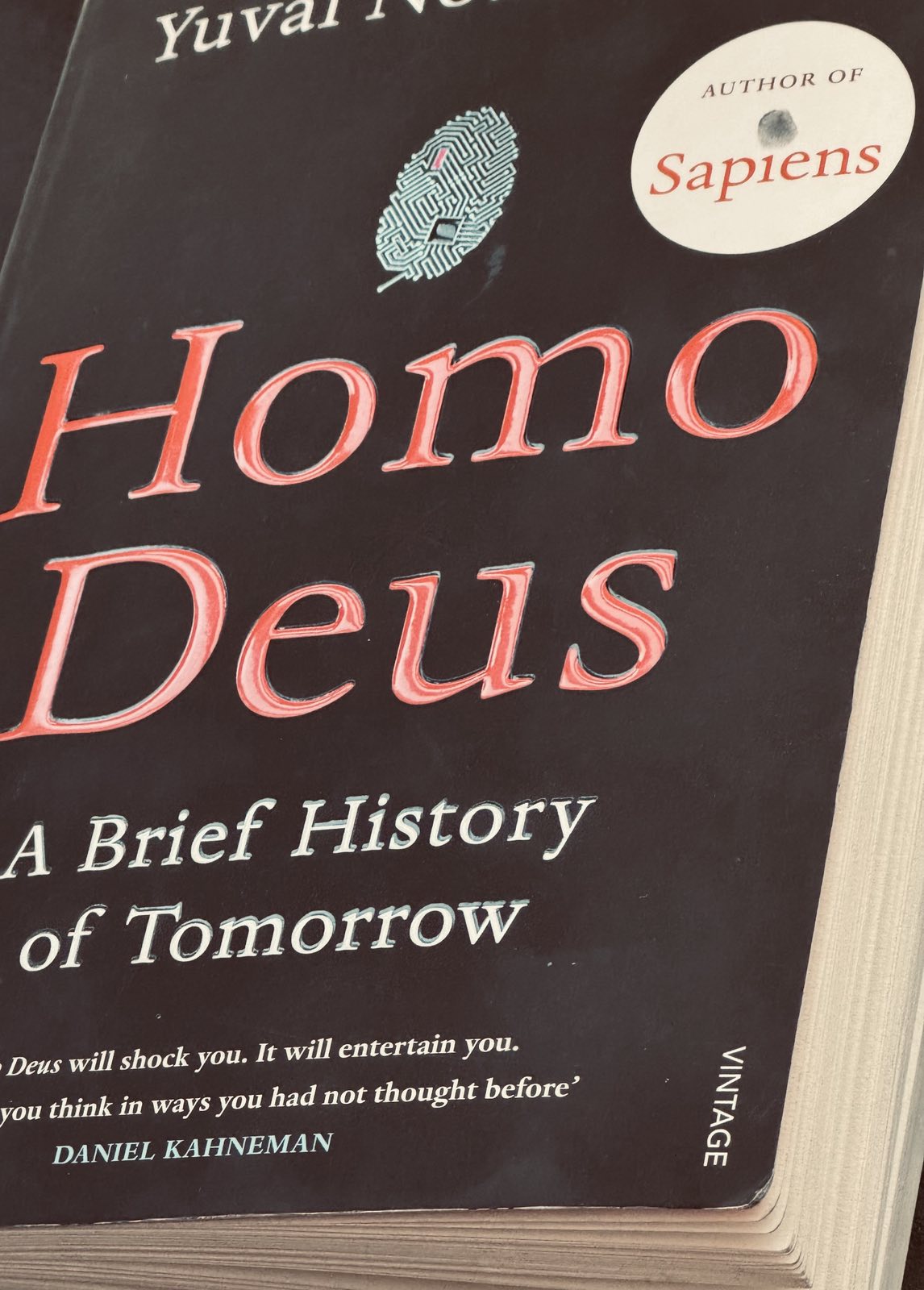
Yuval Noah Harari, Homo Deus. A Brief History of Tomorrow, 2016
Ювал Ноа Харари, Homo deus. Кратка история на бъдещето, 2018 (изд. Изток-Запад)
Харари е изключително интересен автор, който прави находчиви паралели, асоциации и аналогии, правейки връзка между историята и миналото, настоящето и бъдещето на човечеството.
В изданието на Homo Deus (на английски език, 2016, Vintage) Харари въвежда в новия дневен ред на човечеството (The New Human Agenda 2-83), впечатлявайки с ерудиция и познания, които смело използва за да начертае както добрите възможности, така и опасностите пред човечеството, които са разгърнати подробно после в трите части на книгата.
Книгата е структурирана в увод (The New Human Agenda 2-83) и три части (I. Homo Sapiens Conquers the Worls; II. Homo Sapiens Gives Meaning to the World; III. Homo Sapiens Loses Control), в които не само се проследява историята на човечеството през най-значими дела и постижения (не става дума за описание на събития, факти или хронология, а размисъл и опити за предвиждане, базирани на уроците от миналото и екзистенциалната същност на човека):
„Over the last seventy years humankind has broken not only the Law of the Jungle, but also the Chekov Law. Anton Chekhov famously said that a gun appearing in the first act of a play will inevitably be fired in the third. Throughout history, if kings and emperors acquired some new weapon, sooner or later they were tempted to use it….“. (Harari, 2016: 20)
“What else will humanity strive for?…Humans are rarely satisfied with what they already have. The most common reaction of the human mind to achievement is not satisfaction, but craving for more. Humans are always on the lookout for something better, bigger, tastier. When humankind possesses enormous new powers, and when the threat of famine, plaque and war is finally lifted, what will we do with ourselves? What will the scientists, investors, bankers and presidents do all day? Write poetry?
Success breed ambition, and our recent achievements are now pushing humankind to set itself even more daring goals….And having raised humanity above the beastly level of survival struggles, we will now aim to upgrade humans into gods, and turn Homo Sapiens into Homo deus.” (Harari, 2016: 24)
В книгата Харари търси отговори, предлага възможни сценарии, базирани на знанията и способността на човека, търсейки да определи какви ще са поантите в бъдещия дневен ред на човечеството. И как преодоляването на трудностите (белязали човека и неговата същност (глад, болести, войни) води до нов апетит за постижения и разбира се, съвсем нови рискове.
Grim Reaper от средновековните приказки и фолклор може да е изчезнал от обичайното ежедневие, но старостта и смъртта, дори и отложени във времето (при покачването на средната продължителност на живота), не са изчезнали. Но пък променят облика и самото протичане на живота на човека, традиционната линия, налагана през вековете – младост – зрялост – старост и смърт.
„In the twentieth century we have almost doubled life expectancy from forty to seventy, so in the twenty-first century we should at least be able to double it again to 150. Though falling far short of immortality, this would still revolutionize human society. For starters, family structure, marriages and child-parent relationships would be transformed. Today, people still expect to be married “till death us do part”, and much of life revolves around having and raising children. Now try to imagine a person with lifespan of 150 years. Getting married at forty, she still has 110 years to go….
Or consider professional carriers. Today we assume that you learn a profession in your teens and twenties, and then spend the rest of your life in that line of work. You obviously learn new things even in your forties and fifties, but life is generally divided into a learning period followed by a working period. When you live to be 150 that won’t do, especially in a world that is constantly being shaken by new technologies. People will have much longer carriers, and will have to reinvent themselves again and again even at the age of ninety….” (Harari, 2016: 30)
Стъпка по стъпка и много завладяващо Харари премисля и анализира уроците на миналото от зараждането на човечеството до съвременната епоха и феномените на днешния ден, които са новост, опасност и възможност с непредвидени и непредвидими последици.
What does our future hold?